
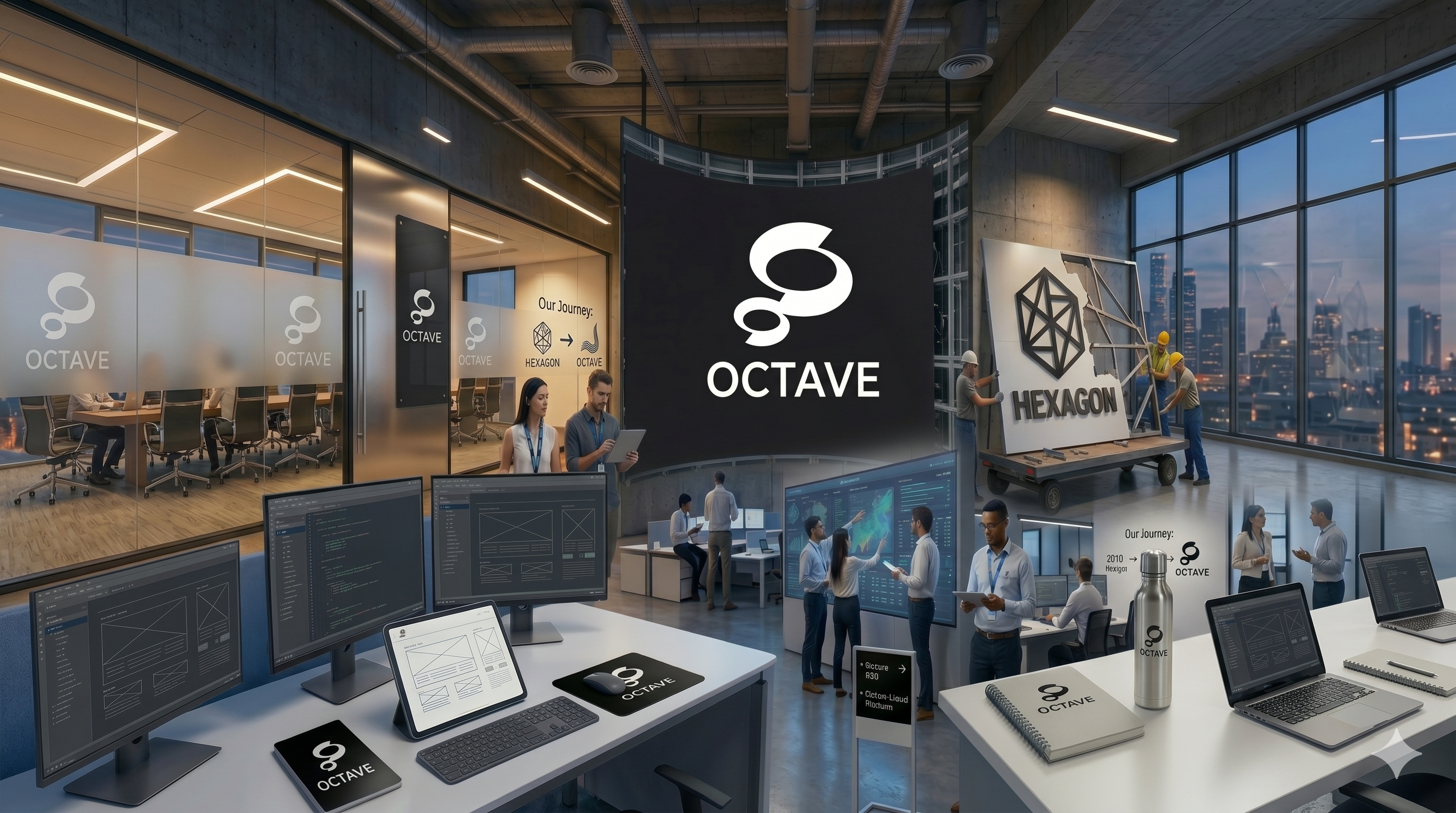
Why Change the Name?
HEXAGON originally began as a relatively focused platform, but over time the system expanded significantly. New modules, admin interfaces, data layers, analytics capabilities, dashboards, integrations, and complementary products were continuously added.
At a certain point, a gap emerged between the original name and the actual scale and capabilities the platform had evolved to provide.
The transition to OCTAVE is intended to establish a broader and more modern product language that will allow the platform to continue expanding into new domains in a unified and scalable way.
The new name reflects the vision of a multi-layered, connected, and dynamic system — a platform that brings together multiple domains, data sources, and operational processes within a single ecosystem.
What Will Users See?
From the users’ perspective, the transition will primarily be a branding update.
Over the coming weeks, the following elements will gradually be updated:
- Login screens
- Logos and headers
- Admin interfaces
- System notifications
- Exported documents
- Training materials and documentation
In addition, product names will also be aligned with the new branding language. For example:
- HEXAGON Core will become OCTAVE Core
- HEXAGON Admin will become OCTAVE Admin
- HEXAGON Insights will become OCTAVE Insights
During the transition period, users may temporarily encounter both the old and new names simultaneously until the rollout is fully completed across all environments.
What Is Not Changing?
The most important point is that this transition does not impact users’ day-to-day work within the system.
Permissions remain unchanged, data is fully preserved, integrations continue operating as usual, and existing workflows are not affected by the rebranding process.
In other words — this is a strategic and branding evolution, not a system replacement.
Why Are Rebranding Initiatives Becoming More Common?
The technology product landscape is evolving rapidly. Systems that once started as a single product often grow into full-scale platforms that consolidate multiple services, capabilities, and interfaces.
In these situations, rebranding is not merely a marketing exercise — it becomes a strategic tool for creating:
- A unified platform identity
- Clear product language
- Better differentiation between platform components
- A consistent user experience
- A stronger foundation for future growth
In other words, the transition to OCTAVE represents far more than a name change — it marks a new stage in the evolution of the platform as a whole.